Table of contents
Unlocking the mysteries of health and healing has fascinated humanity for centuries, and the role of medical intuitives is a subject that sparks both curiosity and debate. As unconventional as their practice may seem, medical intuitives claim to access information about the body and mind beyond traditional diagnostic tools. Discover how science is beginning to investigate their effectiveness, and what this could mean for the future of integrative healthcare.
The foundation of medical intuition
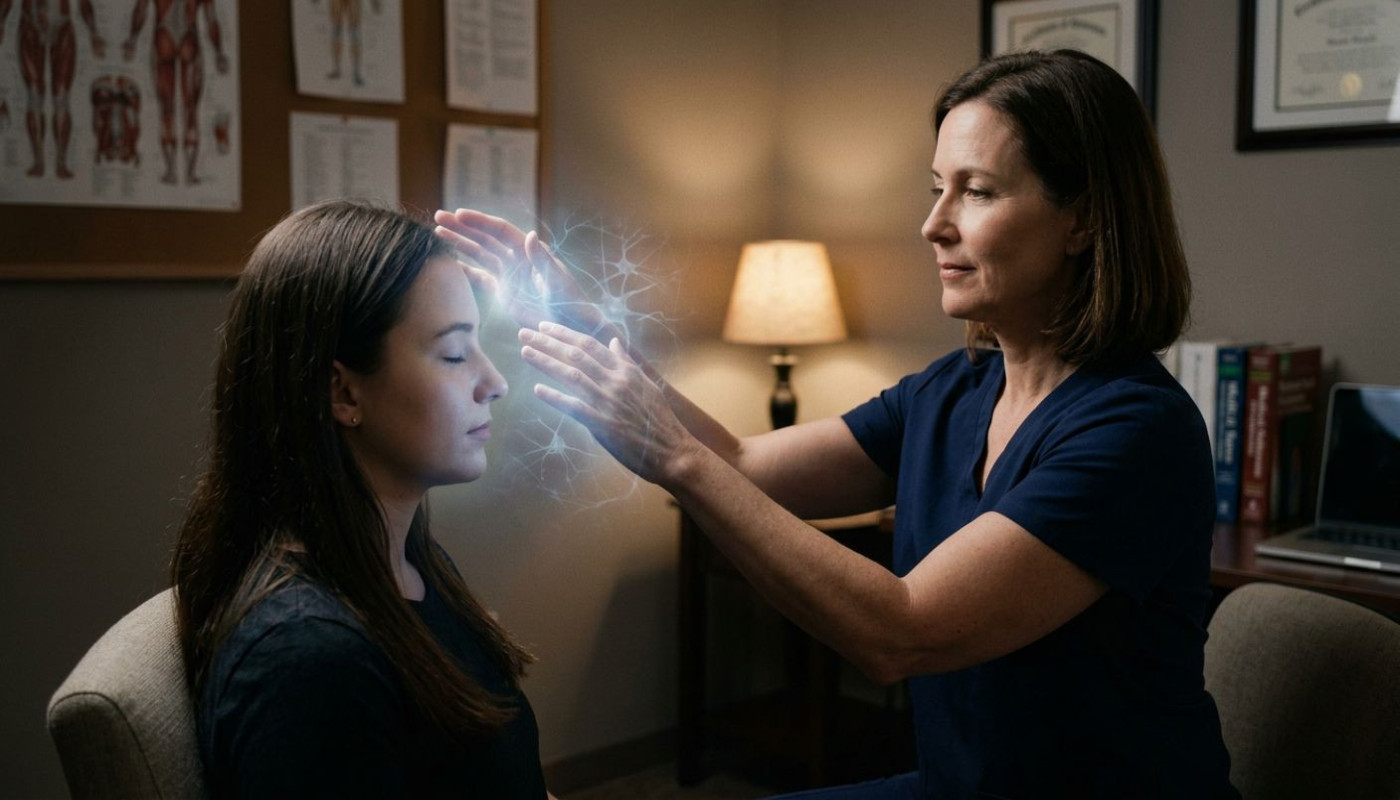
Medical intuitives typically employ refined perceptual abilities, often described as intuitive perception, biofield assessment, or energy medicine techniques, in order to detect imbalances, blockages, or areas of concern within the body. This approach relies on the interpretation of subtle cues—ranging from shifts in energy fields to patterns discerned through bodily awareness—rather than conventional tools like imaging or laboratory tests. The origins of medical intuition can be traced back to ancient healing traditions that emphasized the interplay between mind, body, and spirit, and over generations this practice has evolved alongside conventional medicine, maintaining its own distinct methodologies. While mainstream biomedical models focus on physiological evidence and measurable pathology, medical intuitives frequently incorporate frameworks including the human energy field, subtle body mapping, and the psychosomatic relationship between emotions and physical health, allowing for a broader assessment of well-being.
Unlike traditional diagnostics, which prioritize objective and often invasive tests, the methods central to medical intuition emphasize non-invasive, holistic evaluation. Practitioners often claim to sense disruptions or patterns in a client's energy field, using this information to guide targeted questions or suggest complementary interventions. This approach appeals to individuals seeking alternatives to conventional medical systems, especially when conventional diagnostics fail to provide clarity. The growing interest in services like “medical intuitive near me,” “medical intuitive Spokane,” and “intuitive Washington DC” is evident on resources such as https://www.medical-intuitive.org, which connects seekers with experienced professionals in numerous locations. By integrating both historical wisdom and contemporary understandings of psychosomatic health, medical intuitives continue to offer unique perspectives that challenge and enrich the landscape of health assessment.
Scientific frameworks and emerging research
Researchers have approached the phenomenon of medical intuition with a range of scientific tools, aiming to evaluate its claims under controlled conditions. Controlled studies and pilot programs often pair medical intuitives with patients whose diagnoses are either known or blinded to the intuitive, comparing intuitive assessments with established medical records. Some experiments incorporate psychophysiological monitoring, such as EEG or heart rate variability tracking, to observe potential correlations between the intuitive’s state and accuracy. These approaches attempt to create objective benchmarks in a field otherwise marked by subjectivity and anecdotal evidence.
Methodologies for assessing intuitive accuracy tend to focus on reproducibility and consistency, two benchmarks common in clinical research. Double-blind protocols are frequently used, ensuring that neither the intuitive nor the evaluator has prior knowledge of the patient’s medical history. Results are then statistically analyzed to determine whether intuitive assessments exceed chance or align with conventional diagnostics. While some studies report above-average accuracy, others find outcomes no better than random guessing, highlighting the variability inherent in both intuitive practices and research designs. These inconsistencies have led to ongoing debates about the reliability and specificity of medical intuition as a diagnostic tool.
Quantifying subjective experiences presents unique challenges, especially when intuition defies easy measurement. Emerging fields such as neuroscience and quantum biology are gradually opening new avenues for understanding how intuition might operate within the human mind and body. Functional brain imaging, for example, has begun to identify neural patterns associated with intuitive states, while consciousness studies explore the non-local aspects of cognition and perception. These interdisciplinary efforts suggest that while medical intuition remains difficult to validate within traditional scientific frameworks, it continues to inspire experimental designs that bridge conventional medicine, psychology, and the expanding science of consciousness.
Neurobiology of intuition and perception
The brain’s remarkable ability to process intuitive information draws on interconnected neural systems, many of which operate beneath conscious awareness. The mirror neuron system, known for its role in empathy, allows individuals to internally simulate the observed experiences of others, offering a neural basis for intuitives’ reported capacity to sense what others feel or endure physically. Interoception—the brain’s monitoring of internal body states—enhances this process, equipping certain individuals with acute sensitivity to tiny physiological shifts, both within themselves and while observing others. This means that subtle changes in posture, facial expression, or even micro-movements may be unconsciously registered and interpreted, providing the raw material for intuitive insights. The prefrontal cortex, responsible for advanced pattern recognition, then integrates these cues, allowing for the rapid synthesis of complex information that could guide intuitive judgments in medical contexts.
Emerging studies highlight how heightened empathic sensitivity, often reported by medical intuitives, is linked to robust autonomic nervous system responses when confronted with another person’s discomfort or illness. These responses create a physiological feedback loop, enabling the detection of nonverbal signals that may not be consciously acknowledged by the observer or the subject. Nonverbal communication, such as subtle shifts in voice tone or breathing patterns, offers a continuous stream of data that skilled intuitives might unconsciously analyze. While scientific exploration remains ongoing, evidence suggests that the brain’s capacity for unconscious data processing—especially in emotionally attuned individuals—may serve as a foundation for the phenomenon attributed to medical intuition. This intersection of neurobiology and perception opens thought-provoking avenues for understanding how intuitive abilities manifest and could potentially be cultivated or studied within clinical practice.
Clinical applications and integrative healthcare
Medical intuitives are finding a place within integrative medicine teams, where collaboration with specialists in functional medicine, psychoneuroimmunology, and mind-body medicine is becoming more common. In a multidisciplinary clinic, for instance, a medical intuitive may work with a patient experiencing chronic fatigue that has resisted standard diagnostic approaches. Through intuitive assessment, subtle emotional stressors or unresolved psychological trauma might be highlighted, which can then be explored further with mental health professionals. In another scenario, when conventional lab results yield inconclusive answers, a medical intuitive might detect patterns—such as recurring behavioral triggers or environmental factors—that prompt a fresh investigative path, leading to more holistic care. These contributions can be especially valuable in cases where symptoms lack clear biomedical explanations, adding another dimension to patient evaluation and fostering a more comprehensive approach to wellness.
Integrating intuitive practices into healthcare is not without its complexities, particularly when it comes to ethical standards and patient safety. One significant benefit is the potential enhancement of patient-centered care, as intuitives often encourage individuals to participate actively in their healing process, promoting self-awareness and empowerment. Yet, risks arise if intuitive insights are presented as definitive diagnoses, which could undermine medical rigor or delay access to proven treatments. To mitigate these concerns, healthcare settings must establish clear boundaries: intuitive information should always be communicated within the context of collaborative care, with full transparency, respect for patient autonomy, and explicit informed consent procedures. Ongoing dialogue between conventional practitioners and medical intuitives can help ensure that intuitive observations are treated as adjunctive rather than primary guidance, supporting a balanced, ethical, and patient-focused model of care.
Future directions and potential breakthroughs
Rapid advancements in bioenergetics, artificial intelligence, and neuroimaging are poised to transform how medical intuitives are understood and evaluated. As researchers map subtle energy fields and physiological processes with increasing precision, the possibility emerges to correlate intuitive assessments with quantifiable biological markers. Cutting-edge neuroimaging may reveal neural patterns unique to the intuitive process, providing tangible evidence of heightened perception or pattern recognition abilities among skilled practitioners.
Artificial intelligence also holds promise for deepening the scientific analysis of medical intuition. Machine learning algorithms, trained on large datasets of intuitive readings and corresponding clinical outcomes, could identify patterns that elude conventional diagnostic methods. In this way, AI could both validate intuitive insights and aid in refining practitioners’ accuracy, fostering a feedback loop between intuitive practice and empirical data. This integration may also uncover previously unknown connections between subtle symptoms and underlying health conditions.
Interdisciplinary collaboration is likely to accelerate the development of new diagnostic and therapeutic modalities inspired by medical intuitives. For example, insights from intuition-based assessments might inform the creation of non-invasive screening tools, or personalized treatment protocols that respond to individual energetic or psychological profiles. Integrating insights from neuroscience, psychology, and complementary medicine could move healthcare towards more holistic and individualized approaches, blurring the line between traditional and alternative paradigms.
Ultimately, the evolution of medical intuition alongside technological innovation may challenge fundamental assumptions within the biomedical model. As intuitives work alongside clinicians and researchers, their methodologies could spark fresh hypotheses and research directions, inspiring the design of studies that capture dimensions of health and disease not currently addressed. This dynamic interplay has the potential to broaden the horizons of personalized medicine, offering new ways to understand, diagnose, and care for the human body and mind.
On the same subject

How Legal Defense Strategies Adapt Under Political Persecution Pressure

Case Studies On The Impact Of Medical Intuitives On Patient Recovery

Exploring The Role Of Medical Intuitives In Holistic Health Practices
How Can Medical Intuitives Complement Traditional Healthcare?

How Medical Intuitives Are Shaping The Future Of Holistic Health Care
Exploring The Role Of Medical Intuitives In Enhancing Traditional Healthcare

How Medical Intuitives Contribute To Holistic Treatment Approaches

Exploring The Rise Of Medical Intuitives In Modern Healthcare

Exploring The Role Of Medical Intuitives In Modern Healthcare

Exploring How Medical Intuitives Contribute To Holistic Health Practices

Understanding The Training And Skills Behind Effective Medical Intuitives

Exploring The Ethical Boundaries Of Cheating Wife Investigations

Exploring the Mysteries of the Deep Sea
